3rd Grade History Questions Quiz
True / False
True / False
True / False
True / False
True / False
True / False
True / False
True / False
True / False
True / False
True / False
True / False
True / False
Most-Missed 3rd Grade History Skills: Timelines, Maps, and Civics Clues
3rd grade history questions often miss points for small reading errors, not missing facts. Use the checks below as a repeatable routine.
Reversing timeline order
- What goes wrong: Students know two events but swap before and after, or ignore words like earlier, later, and long ago.
- Fix: Write three boxes labeled first, next, last. Place the anchor event you are sure about, then fit the other event around it.
Skipping the map features that give the answer
- What goes wrong: Students answer from the picture but ignore the compass rose, legend, and title.
- Fix: Point to (1) north on the compass, (2) the symbol key, (3) the map title. Then restate the question using direction words like north of or west of.
Mixing place words
- What goes wrong: Confusing continent, country, state, and city, or treating them as the same size.
- Fix: Use a size ladder before choosing an answer: continent > country > state > city.
Answering the wrong question word
- What goes wrong: Picking a famous name for a where question, or a place for a who question.
- Fix: Circle the question word and say what type of information it demands: person, place, time, or reason.
Confusing fact, opinion, and legend
- What goes wrong: Treating repeated stories as proof.
- Fix: Look for evidence clues such as photos, letters, maps, and multiple accounts. If the item is a tall tale, expect exaggeration.
Trusted U.S. History and Map Skills Resources for Grades 3 to 4
Use these kid-safe sources to review the same skills this quiz checks, especially maps, timelines, and famous Americans.
- DocsTeach: Interactive activities built from National Archives primary sources, great for practicing “What do you notice?” and “What does it mean?”
- National Archives, Educator Resources: Lessons and document sets tied to U.S. history, government, and national symbols.
- Library of Congress Primary Source Sets: Curated sets with teacher guides that fit elementary units on communities, inventions, and change over time.
- Smithsonian Learning Lab: Collections of objects and images you can use for quick research on everyday life in the past.
- National Geographic Education, “Map”: Clear explanations of map parts like scale, symbols, and why maps can look different for different purposes.
3rd Grade History Quiz FAQ: What Skills Show Up Most Often
What map parts should a 3rd grader check before answering?
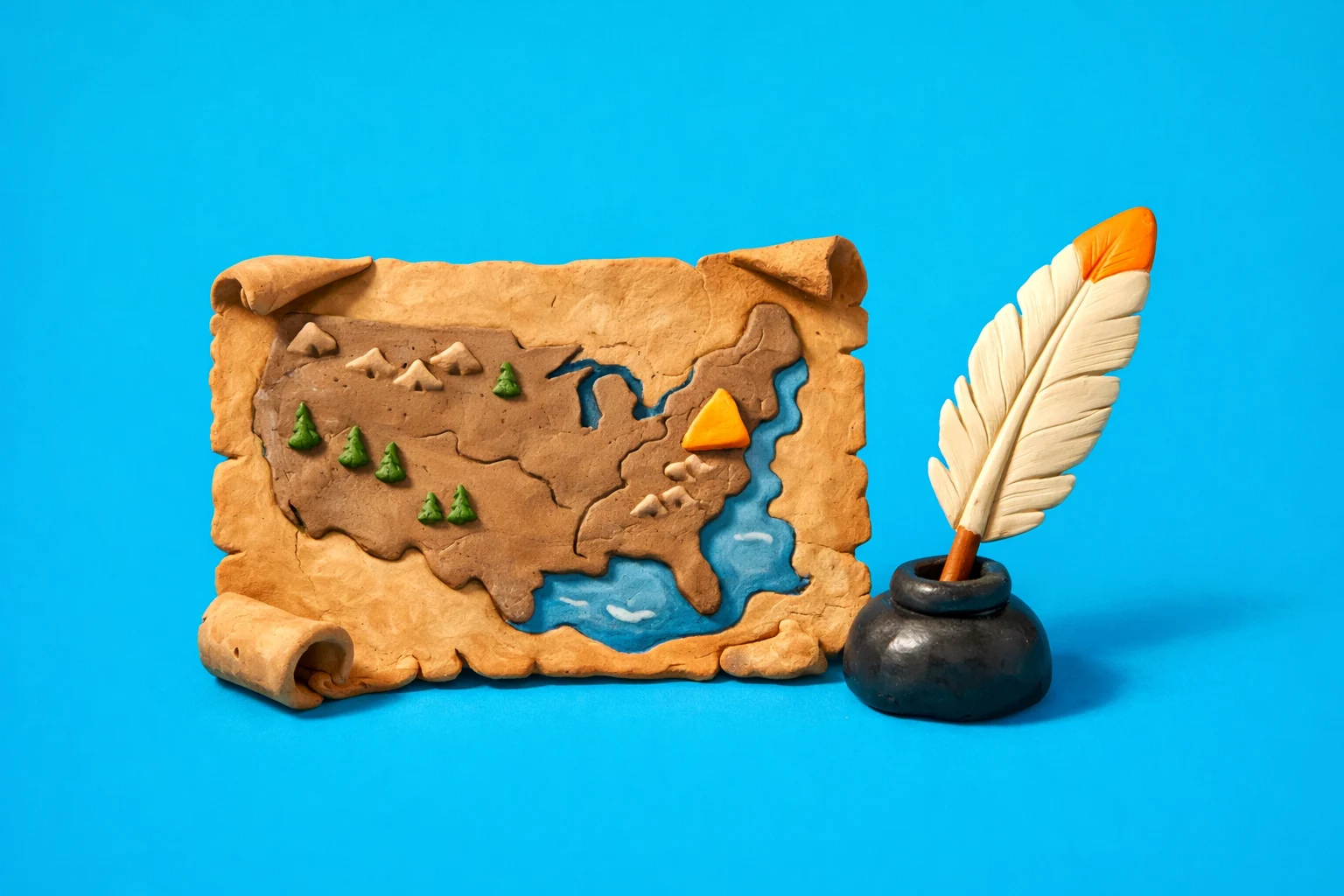
Start with the compass rose to confirm which way is north, then read the legend (key) to decode symbols. Next, use the title to confirm what the map is showing, such as a town map, a state map, or a historical route. Many wrong answers happen because a student uses the picture but ignores the key.
What timeline skills are usually expected at this level?
Most questions focus on ordering events using words like first, next, later, and long ago. A strong habit is to place two “anchor” facts you know for sure, then fit the remaining event between them. If your student is ready for harder sequencing and more detail, use 4th Grade History Questions With Answers as the next step.
Which people and topics show up a lot in 3rd grade U.S. history units?
Expect major early U.S. figures and change makers taught in short, concrete stories, for example George Washington, Abraham Lincoln, Harriet Tubman, and other leaders connected to freedom and civil rights. Questions often check the big idea, not a tricky date. Examples include “Who helped people escape slavery?” or “Why do we have national holidays?”
How are national symbols and holidays usually asked as quiz questions?
Items often connect a symbol to what it stands for. The U.S. flag, the bald eagle, the Statue of Liberty, and the White House are common, along with holidays like Independence Day and Presidents’ Day. Read carefully for the verb in the question, such as celebrate, honor, or remember, because each verb points to a different kind of answer.
What should a student do when a question asks “why” or “how”?
A why question expects a reason, not a person or a place. A how question expects a process or method. A quick check is to say your answer in a full sentence that repeats the question, for example, “We celebrate Independence Day because…” If you want mixed-difficulty practice that still stays kid-friendly, use Easy History Questions With Answers Practice for extra reps.
Want more quizzes like this? Explore the full compliance and training quizzes on QuizWiz.