Is My Finger Broken Quiz
Your Possible Results, Ranked by Urgency
Likely Broken: Get an X-ray ASAP
Red-flag spotterThis result shows up when your answers stack on hard red flags: obvious bend, new lump or step-off, severe swelling fast, or pinpoint bone pain after a crush or fall. You also tend to pick “stop using it now” choices. Treat it as urgent and keep it still.
Possible Fracture: Treat as Broken Until Checked
Cautious stabilizerYou picked signs that can be subtle early: one sharp pain spot on a bone, pain with gentle squeeze, bruising that spreads, or grip that suddenly feels weak. Your finger can look mostly straight, which is why this outcome leans cautious. Splint, protect, and get evaluated soon.
More Like a Sprain: Rest, Ice, Support
Joint-first patternYour answers point to a joint-first injury from a jam, twist, or over-bend: swelling around a knuckle, pain at the ligament side of a joint, and motion that is possible but sore. You did not pick rotation, deformity, numbness, or color change. Support it and reassess over the next couple of days.
Likely Dislocated: Do Not Try to Pop It Back
Alignment alarmThis result tends to appear when you chose “it looks out of place,” “stuck bent,” or “the joint line does not match the other hand.” People with this pattern often report intense pain and instant loss of normal motion. This needs prompt medical reduction and an X-ray check for associated fractures.
Probably a Jam/Contusion: Monitor for 24 to 48 Hours
Impact absorberYour answers read like a bruised finger from a ball impact or door slam: soreness, stiffness, and swelling that is annoying but not deforming. Nail bruising after a crush can land here too if the finger stays straight and circulation feels normal. Use ice, elevation, and watch for symptoms that escalate.
Low Concern: Mild Strain/Overuse
Slow-burn signalThis outcome is common when pain builds gradually from climbing, lifting, typing, or repeated gripping, with no single “moment of injury.” You chose mild swelling at most, full motion, and no deformity signs. Rest and load management usually help, but persistent focal pain still deserves a check.
Trusted Medical Guides for Finger, Thumb, and Hand Injuries
If your result made you pause, these clinician-reviewed pages go deeper on what fractures, sprains, and thumb ligament injuries can look like, plus what care often involves.
Start with these references
- AAOS OrthoInfo: Finger Fractures: Visual clues, common fracture patterns, and why alignment and stiffness matter.
- AAOS OrthoInfo: Sprained Finger: How sprains range from stretched ligaments to full tears, plus typical support options.
- AAOS OrthoInfo: Sprained Thumb: Thumb UCL injuries, “skier’s thumb,” and why pinch weakness can be a key tell.
- MedlinePlus (NIH): Skier’s Thumb Aftercare: Home care basics, splint expectations, and when to call your provider.
- MedlinePlus (NIH): Hand Injuries and Disorders: A broad hub for definitions and related hand, finger, and wrist conditions.
Is My Finger Broken Quiz FAQ: Accuracy, Ties, Retakes
This quiz sorts patterns that commonly separate fractures, sprains, dislocations, and bruises. Use it as a decision aid, not a diagnosis.
How accurate is this result for telling if my finger is actually broken?
It is a pattern sorter. It flags combinations that often show up with fractures, like deformity, malrotation, bone-point tenderness, or a high-force mechanism. Only an exam and, when needed, imaging can confirm a fracture. If you got Likely Broken or Possible Fracture, treat your hand as injured until a clinician clears it.
I can still move my finger. Does that rule out a fracture or dislocation?
No. Many fractures still allow some motion, especially early, and adrenaline can mask pain. The quiz weights how the finger looks and functions, not just whether it moves. Rotation when making a fist, numbness, color change, or a new crooked angle matters more than “I can wiggle it.”
My top two results are tied. What should I do with a close match?
Use the more cautious of the two for your next step. For example, if you are tied between More Like a Sprain and Possible Fracture, splint and seek an evaluation rather than buddy taping and playing through it. Ties often happen when swelling is early and the strongest clues have not fully declared themselves.
If I got “Likely Dislocated,” should I try to straighten it or pop it back?
No. Self-reduction can worsen ligament, tendon, nerve, or blood vessel injury, and a dislocation can hide a fracture. Keep the finger still, remove rings if you can do it without force, and get urgent care. Seek emergency care if the fingertip turns pale, blue, or numb.
My nail is turning purple after a crush. Is that a fracture sign?
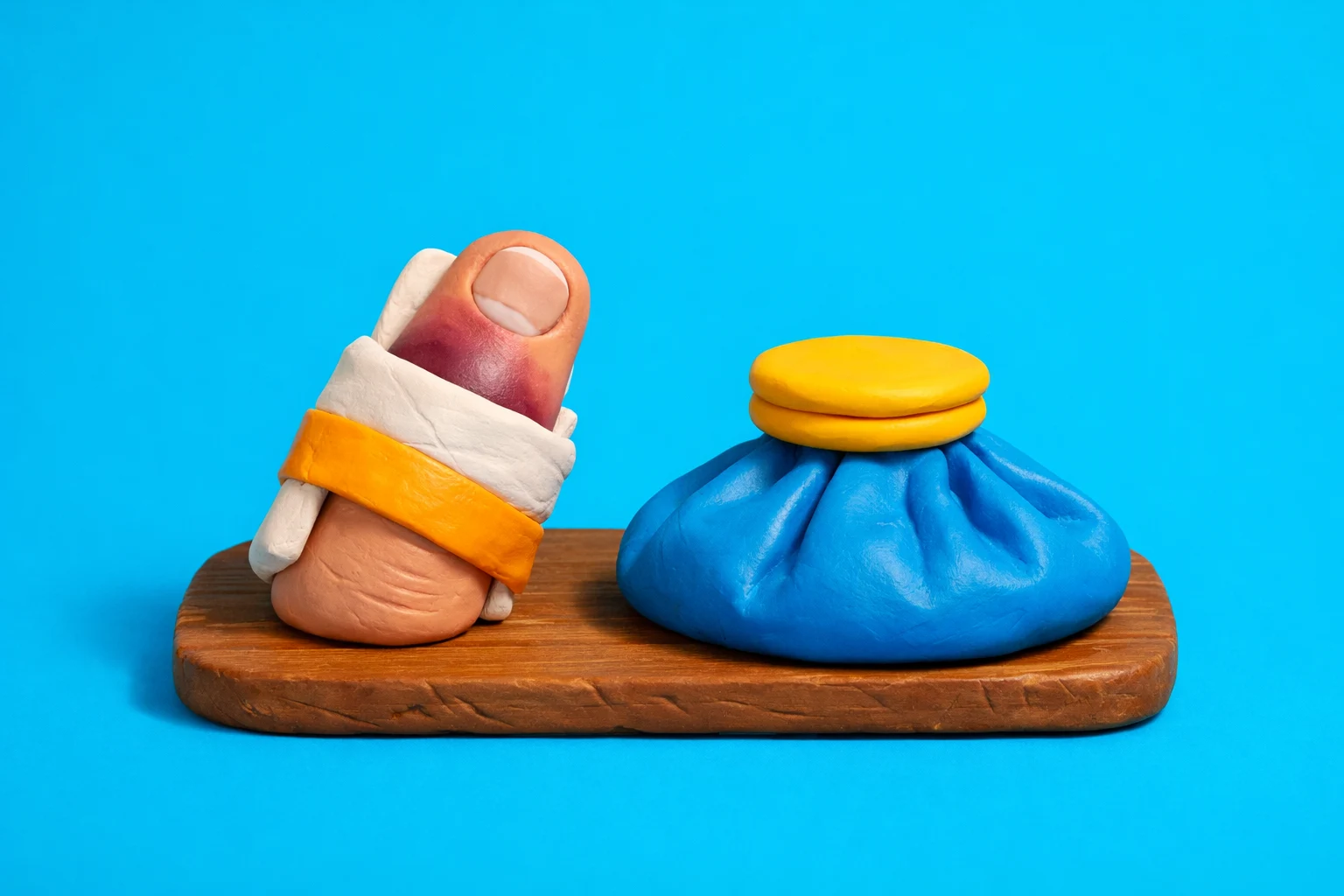
It can be either. A subungual hematoma (blood under the nail) is common after a door-slam or direct hit. It can happen with a bruise alone or with a distal phalanx fracture. Worsening throbbing pressure, nail lifting, or an open cut near the nail bed are good reasons to be seen.
When should I retake the quiz?
Retake if your symptoms change meaningfully, like swelling doubles, bruising spreads, numbness appears, or the finger starts to look rotated when you make a gentle fist. Waiting 12 to 24 hours can clarify patterns because bruising and function limits often show up after the first adrenaline window.
Looking for more? Browse Healthcare & Medical quizzes on QuizWiz or explore the full professional training quizzes on QuizWiz.